
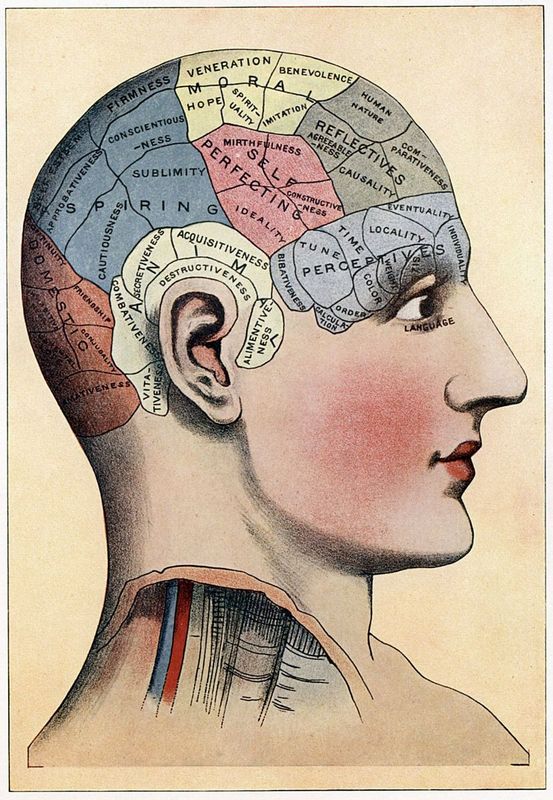
Ever since I started to learn a second language, I’ve noticed that when I speak in this language, I feel as if I am taking on another personality. I had always chalked it up to my non-native accent and my occasional uncertainty in this second language, which undoubtedly makes me sound less confident. However, research over the past few years has increasingly found that languages themselves may affect the way that we think and understand the world around us. In other words, my English-speaking self may react differently to an event, or understand it differently, than my Spanish-speaking self.
Recently, cognitive scientists have uncovered new evidence revealing that language does in fact influence the way in which we see the things around us. One striking example is evident in the research carried out by social scientists Alice Gaby and Lera Boroditsky. Travelling to Australia, the pair studied the Pormpuraawan Aboriginal community there, whose indigenous languages only refer to space in terms of absolute cardinal directions (as opposed to simply using “left” and “right”). Gaby and Boroditsky carried out an experiment by placing images of temporal progressions, such as a human aging, in front of the Pormpuraawans and asked them to arrange the pictures in the correct order. As opposed to English speakers who arrange time from left to right or Hebrew speakers who arrange time from right to left, the Pormpuraawans arranged time from east to west. In other words, they arranged the pictures from left to right when facing south, and right to left when facing north.
Another way in which language affects our way of thinking, and one that I myself have noticed between switching from English to Spanish, has to do with causality. For example, when describing an accident, English speakers often assign an agent who carries out the action (“Julia broke the glass”). On the other hand, in Spanish and Japanese, speakers would likely say “the glass broke.” These different structures have been proven to have important consequences when it comes to remembering events, and blaming others. For example, in a study carried out at Stanford, where Japanese, Spanish and English speakers were all shown clips of people spilling or breaking things, Japanese and Spanish speakers were less likely to remember who caused accidental events compared to the English speakers.
This research has many important implications in the fields of linguistics and language. Particularly, this shows further evidence of the strong differences in the world’s languages, and the importance of using language experts for any translation needs. Trusted Translations, as a Global Leader in Multilingual Translation Services, has access to hundreds of language experts and is happy to provide you with a Free Quote on your next translation project.
Tags: cognitive science, language personality, linguistics, Pormpuraawan, sentence structure, Translation Services, trusted translations
Leibniz
Charlemanne – 742 to 814, King of the Franks, Emperor of the West; who said:
http://www.english-spanish-translator.org/spanish-slang/2503-saying-2.html
You are so right about this and it is a key to cross cultural understanding. It is a lot about language, but more than just what is spoken, what the meaning is. As tranlators that is the key. what does it mean, not just what are the words.
Is it the language that is affecting the culture or the culture that dictates the language?
Yes!!!Language Affect the Way We Think.
[...] question triggered after stumbling upon an article by the title Can language affect the way we think? Generally it is assumed that the meaning we attribute to the things around us is merely a matter [...]
[...] Traducción del orginal de Julia S. [...]
[...] morning I read a blog post that caused me to ponder. In the “Can Language Affect the Way We Think” post, Julia S. writes about how she thinks differently in English than she does in Spanish. [...]
Oh, yes. In fact, when I speak English -I’m native Spanish speaker-, I feel as though I am a foreigner…
This is so inaccurate, it is a real shame. Especially when there are certain things that seemed to be interesting in this article. However, when the author states that Spanish speakers find it hard to identify what the “agent” in a simple sentece like ” Julia broke the glass” is, my interest to go on with the reading just crumbled; it really put me off! Actually, there is no an agent in the sentence in question, but a “subject”; and we, Spanish speakers do know what a subject is. So the author is not only mistaken when it comes to talk about the linguistic nature of other languages, but he/she seemed to ignore the English grammar itself. The fact is that Spanish speakers tend to use active voice sentences such as “Julia rompió el vaso” (Julia broke the glass=literally) and English speakers are more likely to use passive forms = “the glass was broken by Julia” (“by julia” is the agent”). I personally don’t have any difficulty in identifying who broke what, so get your facts straight!
Hi Will,
Thank you for your comments, and I appreciate your thoughts. I guess what I meant in the article is that it is more likely to have a sentence in Spanish that does not have an explicit subject than a sentence in English. In English, the only type of sentence that does not have an explicit subject is an imperative sentence, whereas in Spanish, almost all sentences can be formed without an explicit subject. Of course, it is possible to form sentences in Spanish that do have an explicit subject (like your example of “Julia rompió el vaso”) but it is also just as possible to omit the explicit subject. In the experiment that I mentioned, the researcher attributed the participants’ differences in remembering the “agents” (or subjects) causing the events to the linguistic differences of their native languages.
I am not a dedicated researcher in the field of language science. But interest came on the topic because I also thinks a lot about the science of language. I am surprised if language affect the way we think. Being as a Indian I am familiar with more languages including English (Not perfect). I think when we go through other language, the culture/system related to that language(what are known to us) involve silently to our mind and we feel that we changed the way of thinking.
But if it is correct one more reason might be there behind it. That is How much the language is technically perfect. The way of thinking might get changed according to the technical perfection of the languages.
Indian languages and many of the European and other languages derived from “Sanskrit”, an ancient language of India and all globe. Sanskrit is a 100% technically perfect language in which all alphabets are arranged in a systematic way. I will give here an ex. a, aa, e, ee, u,uu, ey, aye, o, au etc ……. all vowels are arranged first. During the pronunciation of all these vowels our tongue never touches the organs around eg lips, Gill or below portion. After that the series comes : ka, kha, ga, gha, anga…….and this is the time that you check it pronouncing from ka to anga…….What you find …. pronouncing every alphabet a part of our tongue colide with the Gill every time. After that the series is : cha, chha, ja, jha…….. check it what you experience pronouncing this series.
I am not advertizing Sanskrit language but from scientific view point if you will read the Sanskrit you will find a technically perfect language of the world. So why I described, it means this might be possible that our way of thinking becomes much perfect if the language is technically perfect.
[...] are finding that language not only affects the way we communicate, but also the way that we think (see my previous post) and as has recently been discovered, the way that we experience emotions. This may come as no [...]
Great news !
You have rediscovered the Sapir Whorf Hypothesis in both its strong and weak forms.
Something many Linguistic Anthropologists have been investigating for a long time. I can’t wait to read more about the topic. It’s fascinating.
Can you guys recommend any books on this topic?
Well, it’s actually also about the Boas-Jacobson principle. And the research that has been done about cardinal directions has been done many years before with the Guugu Yimithirr. And the subtlety about expressing past tense with the Matses in Peru.
I highly recommend the book “Through the language glass” by Guy Deutscher, which describes all of this (“Can language change the way we think?”) beautifully.
I found this to be the most relevant topic and debate, on fb.. Because it’s here it applies to people all over the world. I feel especially inclined to respond and add my experience on the matter. After nearly 30 years outside my native country of birth, US. I greatly, recognize the author’s point. Just months after leaving California to Hawaii, this point had already become a mild reservation and question to if I would clothe myself with another language than the one that identify myself with. I was young and particularly aware of the importance of my self confidence. Onward to Australia, where English was still a secure advantage in making my way about the world, but it brought the question only nearer and more reserved, I became. When Arriving to the South of France, nearly a year after that, it was final. I was openly reluctant and surely decided. My boldness to launch myself willingly into the unknown, out of sheer curiosity, was tested first and most by just this topic. To shine a little more light on the nature and importance of this topic and reason to make it more relevant, being a descendant of the southern states and speaking the hand-me down language of the African slaves and native Indian, I learned my first foreign language when my family moved to California. I learned to speak it fluently because it meant status. My self confidence grew and I had the confidence of speech in general. Now. world languages are highly compared and weighed up to that. Today, I speak Swedish and Norwegian interchangeably as a result of living a long time in the Scandinavian countries. However, my confidence tattered by the lack of real grip on self expression. Linguistically speaking, I am not in charge. Self expression is everything. It can not be borrowed,copied nor, loaned out. All rights reserved.
Hi
According to Social Anthropologist Geert Hofstede culture influences language but not the opposite. Thats why French speaking Belgians and Dutch speaking ones have more in common with each other than with french or Dutch according to tests
..I’m not sold.. What it looks like is being described is cultural differences.. Those natives use location because it’s required to locate this in their “universe” Bees do the same thing.. left & right are of no value with out an anchor.. The Glass is broken: There was a time when an Englishe speaker would say the same thing as the thing was more importanty that the who.. If the who became relevant then another sentance or two would reveal it. Now we think of things in terms of blame due to culture, where once we worried more about the resource.
Dig?
This is a very interesting topic to me. I am a white South African of English decent. I am a qualified Engineer specialising in problem solving. Here in South Africa we have a race problem. Please forgive me for generalising about race but it is a problem here and I am tasked to solve it.
Every dispute seems to be crystallised into a race debate. The actual problem is that different races seem to approach the difficulties facing them in different ways which are not always acceptable to their fellow Countrymen. The different (unacceptable) approach to issues causes racial tension.
My problem solving training tells me to:
1. Identify that there is a problem (racial tension).
2. Assess what exactly the problem is (frequent disagreement along racial lines)
3. Investigate what is causing the problem.
4. Address the cause of the problem
5. Reassess the solution for outcome compliance.
In assessing the problem I do not believe that the colour of our respective skins or even our history is what polarises us. It is much more to do with the way that we behave now. Generally speaking, it is safe to say that the races react and behave differently to issues they’re exposed to. If behaviour is determined by the way one thinks then race behaviour could be said to be determined by the way the group thinks in other words, their Culture. This discussion group infers that Language influences the way individuals think or by extrapolation a collection of people think.
Language, thought, behaviour and Culture are all interlinked and one or other could be a result of any of the other.
Is it possible then, that by understanding somebody’s language, you could determine (as a generalisation) how they will behave?
Can one solve the problem of different acceptable behaviour between races by mutually understanding or even merging the respective languages?
Love you all,
Paul
Yes, this is a version of the very old theory of linguistic relativity, or Whorfian Hypothesis. This provocative idea has resulted in suggestive but inconclusive research for six decades. There is never any lack of anecdotal evidence, as the comments above show, but it is hard to demonstrate with rigor. The Wikipedia article “Linguistic Relativity” is excellent on the subject. (Or practically any introductory anthropology or linguistics textbook.)
Speaking of getting facts right, Will Camajou, you ought to do so yourself. Subject and Agent can and often do overlap : Julia is the agent in both “Julia broke the glass” and “The glass was broken by Julia.”
And yes, Michelina Bonanno, they’ve landed all over Sapir-Whorf here. I was intrigued by why this would be represented as news until the very end, when I realized it was an advertisement.
“translator” — find anything that talks about the Sapir-Whorf Hypothesis. If you’re near a university bookstore, look in the Linguistics section.
When you speak English. You have conquered. America. And. Many other places
When. You speak spanish. You have conquered. All the way from Mexico. To the Patagonia. And many other places. This. Excludes brazil
I think that the article is really interesting but I guess we speak in different languages with different perspectives. I mean when an English Speaking person eats with fingers a Spanish speaking person eats with the hands! An American would a chicken wing with the fingers meanwhile an Argentinian would eat it with the hands! Everything is according to the perspective you see things!
Yes, of curse is diferent cultura.
I do find that I have a different personality in my second language because I’m more timid when speaking it. I also do find that some of these grammatical features, such as familiar and polite, etc. cause some changes and are culturally influenced. One thing that effects me is the male and female aspect of many European languages. My 2nd language is French and I always found it amusing that the French anthropomorphize everything as male or female. I thought I had it all down: if the noun is spelled with a doubled consonant and a silent “e”, it’s female, otherwise it’s male. Otherwise, if the noun is a particularly female thing or male thing, it can influence the article or adjective, etc. But one day, I was talking about a “key” and the word is spelled “cle” so I said “le cle” and someone said that it’s “la cle”. I was shocked. Not only does it have masculine spelling, but it’s a sort of phallic shape, that goes into an opening. But, no, it’s feminine.
Thank you Paula for sharing: Growing up in Kenya I felt “accidents happen” because of the cultural patterns can clash-this is pronounced in areas whereby different cultures, in a concentrated form fuse in a short span of time without proper adjustment-or harmonizing agent.
I have always wondered if there is an understanding of a regions cultural clashes then patterns could be layered with the aim of creating harmony if expressed artistically could help propel a shift in the frequency of accidents from happening-avoid a crash by creating platform of cognitive perception.
In English, we do have sentences with no explicit subject, e.g. “it is raining”, “it is hot”, and so forth. The book “Language” by Edward Sapir, and the book “Language, Thought and Reality” a compilation of essays by Benjamin Lee Whorf. Wikipedia contains valuable information about both men. Today thee popular work of George Lakoff speaks much about how American English affects the thought of its speakers. There is plenty of more scholarly work out there.
William Labov suggested that sometimes people kept their spoken languages different from that of members of the dominant linguistic culture specifically for the purpose of not being understood by those others.